Thursday, May 07, 2009

Wine making in the Valtellina: traditional nebbiolo from Bruno Leusciatti

The Valtellina wine making region of Italy seems to be slowly splitting down two wine making styles: one is the traditional capturing of the nebbiolo character, and the other is making fatter, higher alcoholic wines that may appeal to new markets but that aren’t necessarily a reflection of the wine making tradition of the Valtellina.

I had the pleasure recently of meeting the wine maker of one of the traditional Valtellina nebbiolo styles, and his wine is truly worth the taste. Bruno Leusciatti is a humble man of the vineyards who has no pretension about making grand wines. His aim is to do the best he can with what he’s got, making modest wines to the best of his ability that he hopes will please his customers.

Bruno inherited his vineyards from his father, in the heart of the Valtellina wine making region at Sassella. His cellar is under his house, he uses chestnut wood for ageing and he is the only pair of hands that works the vineyard, completes the harvest and does the winemaking. Bruno even bottles and labels the wine himself.

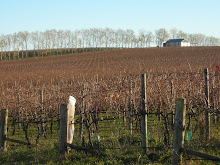
The vineyards are in the truly heroic part of the Valtellina region, and all grapes are picked, by necessity, by hand. The Leusciatti vineyards sit directly above Bruno’s house and the little funicular machines used to transport the grapes down the mountainside descend right into Bruno’s front yard and driveway.

Amongst the hype of the recent Nebbiolo Grapes event in Sondrio, Bruno’s “Sassella ‘Del Negus’” from 2005 quietly conquered a couple of the more discerning palates around. Having tasted it myself, the wine is incredibly elegant and delicate. It woos the drinker with its charm that has nothing to with thick alcohol and heavy body.

From the Lavinium blog we read: “This wine left me speechless. It’s a kind of wine that I would use a term that I never use: beautiful. Beautiful because it’s extraordinarily pure, with perfumes of flowers and stones, intense and very refined, elegant, drinkable, perfect wine with food, but not to be taken for granted; intrinsic with a fascinating melodic expression, that conquers without hesitation.”

That might sound overly poetic, but believe me, you should really try the wine. I haven’t tasted that kind of purity before, either. I’m lucky, because Bruno Leusciatti lives down the road from me and being a salt-of-the-earth, accommodating man, he sells his wine from his house cellar for a mere six to eight euros... Needless to say, he can’t make enough for the demand and it actually upsets him to turn customers away.

Photo | Flickr

Labels: , , ,

Thursday, December 18, 2008

Travelling with wine: sending wine to Australia, part one


I’m currently undergoing my first attempt to post wine to Australia from Italy which could prove to be a hilarious exercise in showing that the Italians, unfortunately, are really a disorganised race.

I believe Italy is a country unparalleled in its rich offering of wines – it has truly everything, not always at high quality but if you go exploring, you will find some real wine gems in Italy. So the first step, and the hardest, was deciding what to send.

I settled with a slightly eclectic and simple mix that wasn’t too expensive, bearing in mind I couldn’t guarantee that it wouldn’t be confiscated by Australian customs. So currently sitting in Alexandria airport, Sydney are a couple of bottles of Greco di Tufo and Taurasi, grape varieties of Greco and Aglianico from Campania; and a couple of bottles of Valtellina nebbiolo as that’s my home ground in Italy.

You may think I wasted my choice, but I believe they will still be appreciated and as they’re destined for under the Christmas tree (or in the cellar where they probably won’t stay for long), we’re about drinking and sharing here, not impressing. Depending on success, more significant bottles may be destined for future shipment.

Australian customs has done the usual routine enquiries regarding alcohol shipments and here’s hoping that they wines will soon be released to the family. In which case, the shipment to Australia via Italian post/FedEx was simpler than the shipment of the wines from Campania to Milan. Why? Because the first transporter got the address wrong.

They decided to ignore all instructions and instead of delivering to my house, delivered to English school I used to work at in the same building who, luckily knowing me, decided to sign for the wine anyway. My former colleagues then forgot to inform me that six bottles of wine were sitting on the classroom floor, and I came across them one evening when I popped in to say hello.

The response from the transporter: when were they going to get around to telling me as they had their entire network searching for the whereabouts of the wine...? My response: perhaps you should have delivered them to the correct address in the first place. On my pointing this out, the guy on the phone politely wished me a pleasant evening, and promptly hung up. Episode two on the eventual whereabouts of the wine will continue this week.

Labels: , , , , , ,

Friday, December 05, 2008

Wine tasting in Italy: Conti Sertoli Salis in the Valtellina

While this shouldn’t be a blog about “what I did on my weekend”, when that has been wine tasting or cellar visits, then I figure I can include it. Two events I’ve been to recently have been quite different one from the other, and have certainly taught me if not about wine, then about people.

A while ago I had the pleasure of a cellar visit and wine tasting in Italy, in Lombardy’s Valtellina region. The evening was organised by the Italian sommeliers association at the Conti Sertoli Salis company, in the old palace of the noble family’s original house.

The wine tasting was one of old vintages of Salis wines which, typical of this region, use the nebbiolo grape. While the first two wines were disappointing, a little over the hill in my opinion, the evening built up from the Valtellina Sforzato Canua, to the ‘grand cru’ from Salis – the Feudo dei Conti, in its first market release.

It was a pleasant enough evening, but I didn’t walk away having bought any wine. This is a problem given what we consider the purpose behind these wine tasting events to be. I just didn’t feel captured enough to purchase and the purported “old vintage” prestige was lost on me.

The thing that fascinates and disappoints me about Italy is its stubborn and undemocratic insistence on the aristocracy. While the current management of Conti Sertoli Salis doesn’t have much to do with the historic Italian Count family’s ownership, the material we were given on the night, and the website, is a lot about their prestigious and pedigree roots.

Can’t we just make good wine? This is a topic I will possibly return to, and it could be my stubborn insistence on Australian egalitarian values (sometimes an exercise in smoke screens with us, too). But given that the Conti Sertoli Salis representative at a recent wine tasting open to all sommelier members refused a friend of mine service of an expensive bottle (the Feudo dei Conti I suspect), as he wasn’t a distributor, I feel it’s pertinent to the discussion. Only an economic outcome was good enough to warrant a taste.

This is highly disappointing because the Valtellina, despite contrary accusations, is more friendly and welcoming than that; and frankly 54 euros for an un-established wine from the Valtellina is a price outside of the market norm. The Feudo dei Conti is a good wine, but it has to play the game in the valley as well.

Labels: , ,

Thursday, October 23, 2008

Chianti tastings: what's wrong with me?

I expect it’s probably heresy to say that you don’t like Chianti, or sangiovese or Tuscan wine in general. So I’ll start this post with a couple of caveats: I haven’t tried much of this style and haven’t attended many Chianti tastings. In addition, sangiovese is not really a choice of wine I normally go for, and I haven’t had many good examples.

But! at our lesson on Monday on Tuscany, I’m afraid the examples we tasted didn’t do much for my Chianti loving experience. This is also probably because the wine was too young, and if you know anything about sangiovese, you’ll know its tannins need time to settle down. Also, good examples of Tuscan wine are expensive and let’s face it, a sommelier’s course costs enough already without having the pretence to serve the best wines.

These wines, for me, need food. While the nebbiolo we have tasted so far was pushing into what the Italians call a “meditation” wine, the sangiovese needed some nice Tuscan meat (possibly chianina?) to go with it. So my Chianti drinking and Tuscan wine experience needs some nurturing, unless I get hold of a Bolgheri after which I imagine I will be converted to Tuscan wine (at the right price).

Labels: , , , ,

Wednesday, October 15, 2008


I mentioned in a recent post that Italy's nebbiolo grape variety is...well, pure bliss. I love nebbiolo, and I'm not afraid to say it. If it's nebbiolo aged in barrique, better again. I like to chew my wines and unfortunately at my sommelier course, our nebbiolo tasting is likely over as we have already looked at both Piedmont and Lombardy, which covers the two Italian regions that produce nebbiolo.

The first nebbiolo we tasted was a grand Barolo from Pio Cesare, from the 2003 vintage. This was a hot vintage in Italy, and produces wines that are perhaps less classic in style, though I appreciated this Barolo for its complexity. There was an ocean of perfumes, with plenty of varied spice dominating the nose.

The second nebbiolo was from the Valtellina, which can be considered the poor cousin of Barolo, though I like to think of it as great nebbiolo at more affordable prices. The Valtellina is home away from home for me, and it its, and my, hear, is nebbiolo. We tasted a sforzato, which is about as prestigious as you can get around these parts.

It was a Triacca, San Domenico sforzato, vintage 2003, and again it displayed an array of spices, though less vanilla than the Barolo. There were complex balsamic notes, leather and underbrush aspects, and the tannins were perfect to balance the 14.5% alcohol. Sforzato is made through a process of drying grapes, called appassimento, which is the same as the wine making of Amarone, to produce high alchol wines.

So, all in all I am satisfied with our tasting so far! I am having a visit home to Australia at Christmas and though it's not necessarily a wine for a hot summer's evening, I'll be keen to try some Australian nebbiolo when home.

Last week's wine of the week from Wine Pages, was a Trentham Estate La famiglia nebbiolo, from NSW. I'll leave aside what I think is becoming a stubborn insistence on screw cap in Australian wines (and I'd hesitate to describe nebbiolo as light-bodied), and say that the wine is intriguing all the same. It's matured for 18 months in French oak, so I'd expect some lovely soft oak characteristics. At this stage, I'd buy the wine for its beautiful label.

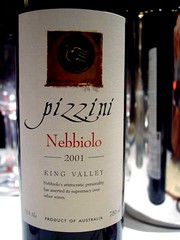
In addition, Franco Ziliani's WineWebNews from the Italian Association of Sommeliers celebrates this Australian wine industry experimentation with a post on Coriole's nebbiolo rose. That an Australian nebbiolo rose can make it to Italy with some positive news is a big step - the convincing is in the drinking. This is in addition to more well-known and successful efforts in Italian grape varieties from Pizzini.

So, could my love of nebbiolo be met on Australian shores too? Only time and plenty of tasting will tell...

Photo | Flickr

Labels: , , ,